
Nexus Battles in Active Matter
Team PvP for passive active-matter sources, issued kits you keep, malls, temples, and vehicles.
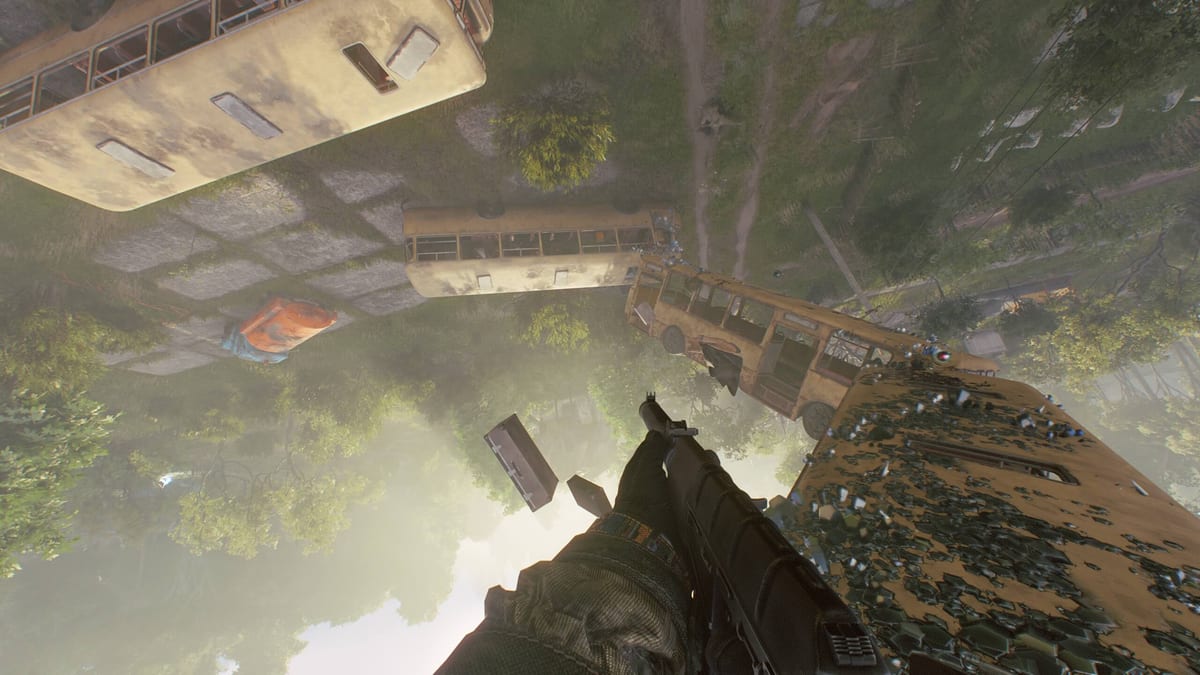
Nexus is the other Active Matter. Extraction raids are Isolated PvE or Open PvPvE on collapsing tiles. Nexus is team PvP over passive active-matter sources and AM-based tech — the long game for syndicates that want a lever on the loop. You still shoot people. You do not bet your Replicator queue on the death.
If you came here from a wipe, breathe. Agency-issued gear in Nexus stays with you when you die. That is the point of the mode and the sentence that should change how you queue. Raid kits, pouches, and safe containers stay in the Shelter. You are not extracting a backpack. You are fighting for a source.
What you are actually fighting for
Official copy is blunt: syndicates fight over control of a passive source of active matter, with weapons, vehicles, and gear they bring or craft on site. Harvesting clusters and corpses is the raid fantasy. Nexus is the infrastructure fantasy. Winning a fight here is supposed to matter to the multiverse map, not just to tonight’s Chronotraces.
Mercenary operations, added with Gigastructure, are the large-format version. Teams capture and hold beacons for points. Respawns arrive in synchronized waves instead of instant solos. You can call vehicles, deployable turrets, and reinforcements. You can drop airstrikes. You can unleash monsters onto the field to break a hold. That last trick is why a Nexus mall can suddenly feel like Park Overgrowth. It is still PvP; the PvE is a tool.
Smaller Nexus queues exist too — compact team fights on purpose-built maps rather than a forty-minute Dalniy hike. Loadout select for the mode is its own screen (check Options if the default bind moved; some builds used L in menus). Do not walk into Nexus wearing a raid pouch plan. The Agency issues the kit. You issue the aim.
Maps: Vanilla Mall, Aztec, skyscrapers
Nexus maps are not Dalniy. They are built for fights that exist outside the raid rotation.
Vanilla Mall arrived with Gigastructure as a Nexus map: interior sightlines, escalators, stores that become bunkers, and enough verticality to make grenade radials matter. Clear with teammates. Do not solo a food court that has two stairwells behind you.
Aztec temples are the classic Nexus postcard: open plazas, elevation, and long rifles. Gravity tricks and portals still show up in some Nexus layouts, which means ceiling peeks are not only a Shegolskoe hobby. If a surface looks wrong, it probably is walkable.
Skyscrapers are the vertical sibling: elevators, stairwells, exterior ledges, and people who live on the floor above your hold. Play the stair you can hear. Flashlights (V) advertise you through glass. Suppressors matter less than they do versus Distorted and more than they do versus a mall shotgunner.
Older compact tiles such as factory-scale arenas still rotate through tests and playlists. If the queue name is unfamiliar, treat it as a team death-and-hold until the beacons teach you otherwise. For raid geography instead — Park, Dam, Headquarters, Downtown, Airport — go back to the maps hub. Nexus will not teach you extract portals.
Vehicles, issued gear, and how this is not a raid
Vehicles are first-class in Nexus. Buggies, ATVs, trucks, armored cars, and heavier platforms show up as the mode scales. Quad bikes grew passenger and trunk behaviour in raids; Nexus uses the same handling language at higher speed and with people shooting the driver. Call a vehicle as support when the playlist allows it. Do not treat a jeep as cover against a rooftop that sees the engine block.
Agency-issued gear is the risk valve. Die in a raid and the rifle is gone unless it was in a container you burned. Die in Nexus and you keep the issued kit. That makes Nexus the right place to learn recoil on guns you have not researched, to test peek timing, and to play when your stash is too empty for Open. It is a bad place to farm Chronotraces, keys, or enriched blueprint copies. Those still live in raids.
You will still meet monsters when a mercenary op spawns them as a weapon. You will not meet a shrinking Unstable Zone that deletes the mall. You will not mindvault-hack a corpse for harvest in the same way, and you will not send a Robot Dog to a portal. If a teammate goes down, wave respawn is the plan, not a tactical beacon in a CAM slot.
Pack a loadout mindset even when the guns are issued: know whether you want a close SMG for Vanilla Mall or a rifle for Aztec. The weapon tier list still applies to how guns kick. Controls still apply to hold-T heals and hold-G grenades. The beginner guide still applies if you cannot find the Missions terminal that queues Nexus versus Isolated.
Play Nexus when you want PvP without a stash funeral. Play Isolated when you want the loop. When you go back to raids, how to extract is the page that actually saves the bag. Mix the modes and the game finally makes sense: one teaches shooting, the other teaches leaving.
Frequently Asked Questions
Quick answers to the most common questions.
Do I lose my raid loadout if I die in Nexus?
No. Agency-issued Nexus gear is kept on death. Raid pouches, plates, and safe containers stay in the Shelter. That is the main difference from Isolated and Open.
What maps does Nexus use?
Purpose-built PvP tiles, including Vanilla Mall, Aztec temples, and skyscrapers. They are not Dalniy Island extracts. Check the queue name before you assume outdoor rifles.
Why fight for Nexus if I only care about extraction?
Passive active-matter sources and syndicate leverage sit here. Even if you ignore the metagame, it is the safest gunplay lab in the game because issued kits survive the death.
Are vehicles allowed in Nexus?
Yes. Mercenary operations call in vehicles, turrets, airstrikes, and even monsters. Smaller playlists may skip the heavy iron. Drive like everyone can see the engine.
Can I practice gunplay in Nexus without risking the stash?
That is the mode's best use. Queue Nexus, learn recoil, then take a reprintable kit into Isolated. Open can wait until you can extract on purpose — see how to extract.